


Minipuzzles Go!
4.63.00 Reviews
App Specs
- Version
- 0.9.0
- Updated On
- License
- Free
- Downloads
- 10,000+
- Developer
- Puzztime!
- Categories
- Trivia
- Platform
- Android
Screenshots
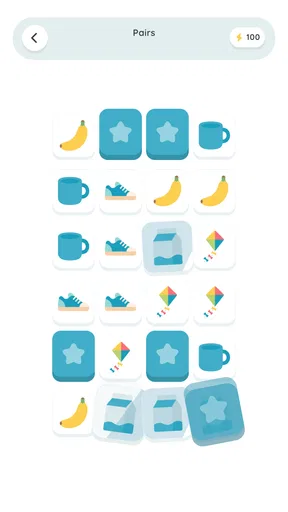
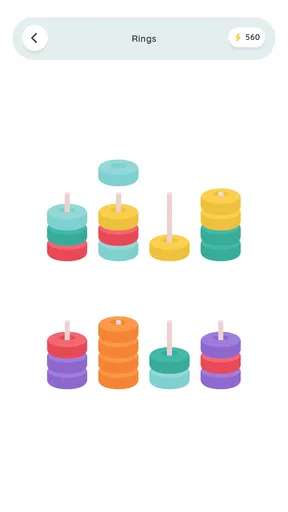
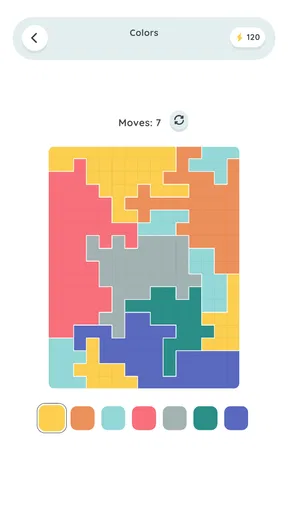
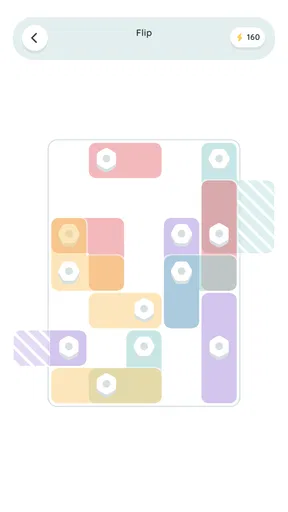
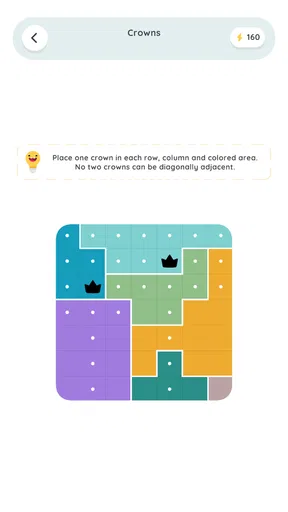
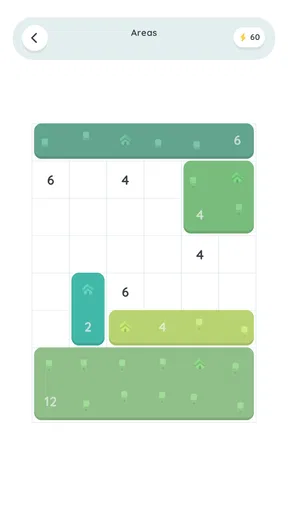

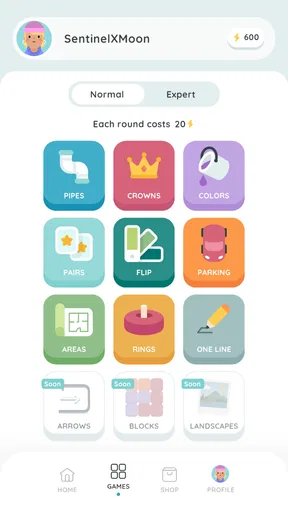
 Analysis by AppCompare
I went into Minipuzzles Go! expecting a quick collection of small brain exercises, and that is exactly where it makes the best first impression. This is a free trivia game from Puzztime! built around short puzzles, relaxed problem-solving, and a daily reason to return. It is easy to understand, gentle enough for a spare minute, and more thoughtful than a simple tap-through distraction.
What I like most is its modest scale. It does not ask me to learn a complicated ruleset before playing, nor does it turn every session into a race. The appeal is the feeling of solving something small and complete. I can open it when I am waiting for an appointment, play a few challenges, and leave without feeling that I have abandoned a larger task.
That simplicity also defines its limits. Players looking for a deep campaign, competitive multiplayer, or a large adventure will probably find the experience too restrained. Minipuzzles Go! works best when I treat it as a regular mental break rather than a full-time game. Its average rating of 4.6 from roughly 180 ratings suggests that this focused approach is connecting with its audience, while its audience size of over 10 thousand installs shows that it is still a relatively small title.
How the first sessions establish a reason to keep playing
I look at the first sessions as a chance to decide whether this kind of small, self-contained challenge fits my day, rather than as a test of how quickly I can progress. A useful approach is to notice which clues invite patient reasoning and which feel like familiar trivia; that distinction helps me tell whether the game’s calm pace is a genuine match. From there, the question becomes what makes returning feel worthwhile.
Small goals that are easy to understand
The early goal is refreshingly clear: solve the puzzle in front of me and enjoy the process. Because the game is categorized as trivia, I approach each challenge with a mixture of memory, recognition, and deduction rather than expecting reflex-heavy action. That makes the opening especially approachable for people who prefer thinking time over rapid controls.
A useful way to play is to set a very small personal target. I might complete one puzzle with my morning coffee, or use a short session as a reset between work tasks. The game’s daily-challenge focus naturally supports this habit. Instead of demanding a long commitment, it gives me a reason to check in and then lets the session remain compact.
This is also where the title’s relaxing character matters. Some trivia games make every wrong answer feel like a failure, but a calmer puzzle format is better suited to casual use. I can think carefully, try a different angle, and treat an error as part of the exercise. That makes the game suitable for a family setting as well, especially because its content rating is Everyone.
Worth Reading Before You Choose

EA SPORTS FC Mobile 26 Is a Bigger Football Game, but It Takes Time

Flipboard Shows What News Apps Must Do Beyond the Feed

Switching to Android Auto Means Rethinking Your Driving Routine

Google Calendar Makes a Crowded Week Easier to Manage

Ludo King Makes the Most of the Minutes Between Plans

Baby Panda World Brings Quick Play to Modern Phones, but Its Game Library Feels Busy
There is a practical distinction between “easy to start” and “easy to master.” The first few interactions are understandable, but the real test is whether the puzzles remain satisfying after the novelty fades. In my experience, the daily structure helps because it gives each visit a defined purpose. I am not opening an endless feed without direction; I am checking whether today’s challenge fits my mood and available time.
Progress signals without turning the game into a chore
Minipuzzles Go! appears most comfortable with lightweight progress. The satisfaction comes from completing individual challenges and building a routine, not from a story campaign that needs hours of attention. That is a good choice for a game designed around short visits, although players who need visible long-term milestones may want more substantial progression than this format provides.
I found it helpful to judge progress in three layers. First, there is the immediate win: understanding and solving the current puzzle. Second, there is the improvement in how quickly I recognize the type of thinking a challenge requires. Finally, there is consistency, meaning whether I return to the daily challenge often enough for the game to become part of my routine. These are not dramatic unlocks, but they are meaningful signals for this kind of experience.
That distinction matters when comparing it with larger trivia platforms. Many alternatives focus on leaderboards, head-to-head matches, broad question banks, or collectible rewards. Those systems can create stronger external motivation, but they can also make a casual player feel behind. Here, the quieter loop is more inviting if I want a private brain workout rather than a public performance.
My tip is not to rush through every available puzzle simply to maximize a session. The format benefits from stopping while the experience still feels fresh. If I save the game for a few small moments during the day, the daily element has more value than it would if I consumed everything at once. This is one of the less obvious trade-offs: the game’s pacing works better when I cooperate with it instead of treating it like a conventional level-based marathon.
Where the difficulty curve feels comfortable
The strongest part of the difficulty design is its accessibility. A trivia puzzle can be challenging without requiring complicated controls, and that makes the game a good fit for players who enjoy wordplay, general knowledge, and light logic. I can recommend it to someone who wants to exercise attention without committing to an intense competitive environment.
At the same time, a relaxed presentation should not be confused with unlimited depth. Players who regularly finish demanding quiz games may want a sharper difficulty curve or more specialized subjects. Minipuzzles Go! is better suited to mixed-skill groups, occasional players, and people who enjoy solving at their own pace. It is not the first choice I would make for serious trivia training or tournament preparation.
When a puzzle feels difficult, I get more value by changing my approach instead of repeatedly guessing. I read the wording slowly, separate what I know from what I am assuming, and look for the simplest interpretation before reaching for an obscure one. This method is particularly useful in short-form trivia, where an answer can seem complicated only because I have overthought the clue.
The game’s minimum operating requirement is Android 7.1, which keeps it accessible to people using older compatible devices. That is helpful for a casual title because it reduces the pressure to own recent hardware. I would still judge the experience on the specific phone or tablet being used, especially if the player is sensitive to text size or prefers a larger screen for reading puzzles.
What sustains the loop, and where the pressure appears
Once the basic appeal is clear, I pay attention to how a daily routine can stay enjoyable without becoming another obligation. I find it helps to choose a natural stopping point and let a missed session pass without trying to catch up; that keeps a brief puzzle break from turning into pressure. The next section weighs that steady rhythm against the limits of a compact trivia game.
Daily play is the main retention idea
The daily challenge is the clearest reason to return. It creates a small appointment without requiring a large commitment, and that is a smart match for relaxing puzzles. I can imagine using it during a commute, while waiting for food, or after dinner when I want something more engaging than scrolling but less demanding than a full game.
A realistic everyday routine would be to open the game after lunch, attempt the daily puzzle without distractions, and leave after solving it or deciding to revisit it later. That routine gives the title a useful role: it fills a short gap with focused attention. It also avoids the common problem of casual games that keep asking me to continue long after I have stopped enjoying myself.
There is a subtle retention trade-off here. A daily challenge can become a pleasant ritual, but it can also feel like an obligation if I already have too many streak-based apps competing for attention. I prefer to use this game flexibly rather than allowing a missed day to create guilt. Its relaxing identity is strongest when the return is voluntary.
Players should also understand the difference between free access and a completely purchase-free experience. The game is free to download and play, while optional in-app purchases range from ninety-nine cents to about twelve dollars per item. That price range makes it worth checking the purchase flow carefully before confirming anything, particularly if the device is shared with children. The Everyone rating makes it family-friendly in age terms, but adults should still manage spending settings according to their household.
What the game does better than familiar alternatives
Compared with a traditional trivia app built around rapid-fire questions, Minipuzzles Go! has a more restful identity. I am less likely to feel that I need instant recall or perfect speed. Compared with a large puzzle adventure, it is easier to pick up and put down because the individual activity is the point rather than a long chain of missions.
That middle ground is valuable. Some people want more mental involvement than a casual matching game provides, but they do not want the pressure of a live quiz match. This title can occupy that space. It is also a better fit than a competitive alternative for someone who prefers to solve privately, at a personal pace, and without comparing every result with strangers.
The compromise is variety and long-term ambition. A broader trivia platform may offer more categories, social competition, or a stronger sense of accumulation. A dedicated puzzle game may provide more intricate mechanics and a more carefully staged campaign. If those are your priorities, another option could be more rewarding. I would choose Minipuzzles Go! specifically for its short, low-pressure sessions and daily rhythm.
Friction that affects the long-term experience
The main risk is repetition of purpose. Even enjoyable mini-puzzles can lose their impact if I approach them with the same expectation every day. The game’s concept is focused, so its success depends on whether the available challenges continue to feel fresh to the individual player. This is not a reason to reject it, but it is a reason to set realistic expectations: the appeal is consistency and convenience, not an enormous content-driven journey.
Another limitation is the absence of a strong reason for players who need explicit achievement goals. If my motivation comes from unlocking a map, developing a character, climbing a competitive ladder, or completing a campaign, a daily puzzle routine may not hold my attention for long. I would skip this game in favor of a deeper alternative if I wanted visible progression to shape every session.
There is also a pacing question. Short sessions are excellent for busy days, but they may feel too slight when I have a full evening available. I would not install this expecting it to replace a major strategy or adventure game. Instead, I see it as a companion app for the moments when I have ten minutes and want to use them well.
One practical workflow improves the experience: play with notifications and distractions reduced, then stop after a natural endpoint. The game’s value comes from concentration, even when the puzzle itself is small. If I multitask through every challenge, I lose the quiet satisfaction that separates it from passive phone use.
Who should try it, and who should pass
I would recommend Minipuzzles Go! to casual trivia fans, families looking for an Everyone-rated mental activity, and anyone who enjoys a short daily routine. It is especially suitable for people who want to think without feeling tested by a timer or pushed into competition. The free entry point makes it easy to sample the style before deciding whether optional purchases are worthwhile.
I would be more cautious recommending it to expert quiz players, achievement-focused gamers, and anyone seeking multiplayer tension. Those players may find the relaxed presentation too mild or the progression too understated. Likewise, if you want a story, elaborate worlds, or a long-term build system, this is probably not the right destination.
The developer, Puzztime!, has positioned the release as a compact puzzle experience, and the current version is 0.9.0. That version label makes me approach the game as a focused experience that may still be evolving rather than as a huge, finished platform with every possible mode. I would install it for what it already does well: approachable daily brain teasers, not for features outside that core.
My progression verdict after settling into the routine
Minipuzzles Go! sustains play through a simple sequence: open the game, face a manageable mental challenge, enjoy the solution, and return when the next daily opportunity feels appealing. Its goals are immediate, its progress signals are personal, and its difficulty is aimed more at steady engagement than at proving expertise. That is a coherent design, not a lack of ambition.
The most important question is whether you enjoy small wins. If you do, the game can become a pleasant part of a morning, break, or evening wind-down. If you need dramatic unlocks or increasingly complex systems to stay interested, its restrained loop may feel thin. I appreciate that it does not pretend to be something larger: it is a free trivia game for short puzzle sessions, with optional purchases and an emphasis on daily play.
My final advice is to treat it as a mental snack rather than a complete meal. Give each challenge your full attention, avoid turning the daily routine into a stressful obligation, and decide early whether the available level of variety matches your expectations. For relaxed, accessible brain teasers on a compatible Android device, I think it is worth trying. For competitive trivia or deep progression, I would choose a more specialized alternative.
Overall, I enjoyed the balance between approachability and thoughtfulness. The game does not need elaborate systems to justify a few minutes of attention, and its best quality is that it respects those few minutes. If your ideal mobile game is a calm daily puzzle rather than an endless grind, Minipuzzles Go! is an easy recommendation.
Pros
- Quick levels are ideal for short breaks or casual play.
- Simple controls make the game accessible to most players.
- The variety of puzzles helps prevent the gameplay from feeling repetitive.
- Lightweight design should work well on many older devices.
- Progressive challenges provide a satisfying sense of improvement.
Cons
- Some puzzles may feel too easy for experienced players.
- Later levels can become repetitive if played for long sessions.
- Hints or extra assistance may be limited during difficult puzzles.
- The small-scale format may not appeal to players seeking deep gameplay.
- Ads or optional purchases may interrupt the otherwise quick experience.
FAQs for Minipuzzles Go!
What is Minipuzzles Go!?
Minipuzzles Go! is a casual puzzle game designed for short, relaxing play sessions on Android and iOS devices. It offers a collection of small, easy-to-start challenges that can be completed independently, making it suitable for playing during breaks or while traveling. The game focuses on simple controls, quick objectives, and progressively more engaging puzzles rather than a complex story or competitive gameplay.
Is Minipuzzles Go! free to download and play?
Minipuzzles Go! can generally be downloaded for free, although the exact availability of advertisements, optional purchases, or premium features may depend on the version and platform. Before installing, users should check the store listing for current information about in-app purchases. The free version is suitable for trying the main gameplay, while optional payments may provide extra content or remove certain restrictions.
Does Minipuzzles Go! work without an internet connection?
Many of the puzzle activities in Minipuzzles Go! are designed to be played offline, which makes the app convenient for flights, commutes, or areas with limited connectivity. However, an internet connection may still be required for initial downloads, advertisements, updates, cloud-related features, or purchases. Offline availability can vary by version, so it is worth testing the game after installation before relying on it without mobile data.
Is Minipuzzles Go! suitable for children and beginners?
Minipuzzles Go! is aimed at casual players and beginners because its short challenges and straightforward interaction make it easy to understand without extensive instructions. Some puzzles may become more demanding as progress continues, but the overall format is approachable for a wide range of ages. Parents should still review the app’s age rating, advertising, privacy information, and purchase settings before allowing children to use it.
What are the main advantages and disadvantages of Minipuzzles Go!?
The main advantages of Minipuzzles Go! are its quick rounds, accessible controls, and variety of bite-sized puzzles, which make it a good option for casual entertainment. It does not require a large time commitment and can be enjoyable for players who prefer simple challenges. Potential disadvantages include repetitive gameplay for users seeking deeper strategy, advertisements in the free version, and possible limitations or extra costs for advanced content.


